


Every Dog Owner’s “Breaking Point”
Nearly every Pittsburgh dog owner experiences a moment when life with their dog feels harder than expected. At Spitze K9, we routinely meet families who walk into our Bridgeville training facility looking exhausted, frustrated, and unsure of what to do next.
A puppy who once curled up quietly on the couch is suddenly tearing through shoes, barking at every noise, and acting as though they’ve forgotten every cue you worked so hard to teach. For many owners, the shift happens almost overnight. A phase that was supposed to be “fun and cute” becomes stressful and confusing.
It’s important to know: this is normal.
Dogs go through developmental stages, just like children. Each stage brings new behaviors, new challenges, and new opportunities for learning — but some moments can stretch even the most dedicated owner’s patience.
The silver lining is that none of these challenges is permanent. With structured guidance and consistent training, you can help your dog navigate their most challenging phase and emerge with stronger obedience, better habits, and a more confident relationship with you.
At Spitze K9, our goal is to help local dog owners navigate these stages with clear direction and professional support.
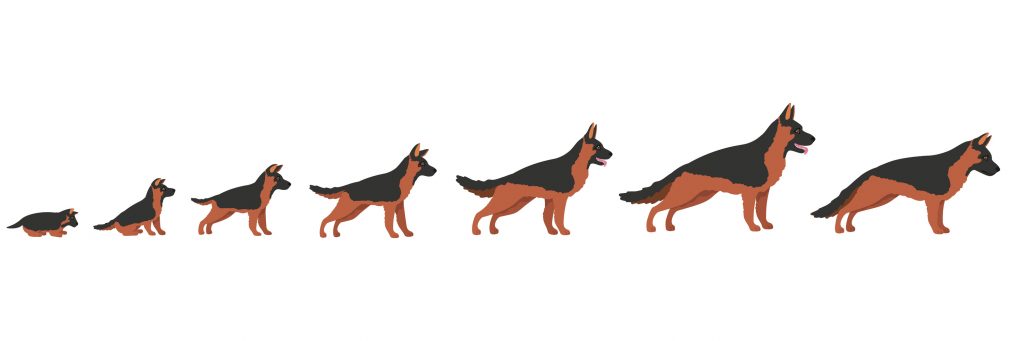
Understanding Your Dog’s Developmental Stages
The first two years of a dog’s life involve rapid changes. Some phases are smooth; others feel like you’re starting over. By understanding what’s happening developmentally, you can approach your dog’s behavior with perspective instead of frustration.
Neonatal to Transitional (0–4 weeks)
This early stage involves bonding, sensory development, and basic physical growth. Most owners aren’t involved yet, but it forms the foundation for a dog’s confidence and emotional stability.
Socialization Period (3–12 weeks)
According to the Regina Humane Society and similar canine behavior resources, this is the most influential learning window. Puppies learn information quickly and require controlled exposure to various stimuli, including people, animals, sounds, textures, and environments.
Common challenges include:
- Early nipping
- Fear of new situations
- Potty-training accidents
Training goals at this stage focus on providing gentle guidance, building confidence, and using simple cues, such as “sit,” “down,” and recognizing names.
Testing Phase (3–6 months)
As puppies become more curious and independent, they will begin testing boundaries.
Owners often see:
- Increased chewing due to teething
- Ignoring familiar commands
- Exploring behaviors like jumping or counter sniffing
- Energy spikes that seem to come out of nowhere
This is also when owners begin feeling the first real wave of stress. Structured routines and clear boundaries become essential.
Adolescence (6–18+ months)
This is the period that motivates many Pittsburgh dog owners to seek help. Hormonal changes and newfound confidence often combine, resulting in inconsistent adolescent dog behavior and a decline in obedience. When you train with us in Pittsburgh, we can help you navigate these behavior changes.
As 3 Lost Dogs explains, adolescence is one of the leading causes of “owner burnout.” Symptoms often include:
- Regression in-house training
- Destructive chewing
- Difficulty sleeping through the night
- Emotional fatigue from constant supervision
- Frustration when once-reliable commands stop working
- Training during this stage focuses on impulse control, reliable obedience, working around distractions, and reinforcing consistency at home.
Why these stages matter
Recognizing that your dog is not trying to “be bad” — they are simply growing — makes it easier to respond constructively. With professional training, owners gain tools that support these developmental transitions rather than working against them.
Why This Period Feels So Tough
Even experienced dog owners can feel overwhelmed during their dog’s most challenging phase. The difficulty is often due to various factors:
Unrealistic expectations
Many owners expect puppies and young dogs to settle quickly or follow commands consistently. In reality, learning is not a linear process. Regression is a regular part of the development process.
Inconsistent routines
Work schedules, school pick-ups, travel, and busy households all interrupt their training consistency. Dogs do best with structure, and without it, confusion grows and unwanted behaviors increase.
Overload and emotional fatigue
Sleep disruptions, destroyed belongings, accidents, barking, and constant supervision can leave owners feeling drained. It’s common to feel guilt, frustration, or even resentment when the situation feels out of control.
Lack of support or guidance
Trying to navigate training challenges alone often adds unnecessary stress. Having a professional trainer who understands the process can alleviate emotional pressure while providing you with a clear plan.
At Spitze K9, we approach each case with empathy and compassion. We understand how overwhelming this can be because we experience it every day. Our job is not only to train your dog, but also to support you throughout the learning process.
How Training Helps — The Spitze K9 Approach
Professional training turns unpredictable behavior into manageable, steady progress. At Spitze K9, we employ a balanced and personalized approach that enables dogs to understand what’s expected of them — and helps owners maintain consistency.
Personalized Evaluations
We assess your dog’s behavior, temperament, and your goals. No two dogs learn the same way, and our programs reflect that.
Clear Communication Techniques
Our training focuses on clarity rather than force or frustration. Dogs learn faster when they understand how to succeed.
Structured Board and Train Programs
Owners often search for “board and train near me” when daily life becomes too hectic or the dog’s behavior becomes too challenging to manage alone.
Our board and train program provides:
- Daily repetition and structure
- Exposure to real-life distractions
- Practice in controlled environments
- Faster progress through consistent training
This option is beneficial for dogs who ignore commands at home but thrive with routine and professional guidance.
Owner Coaching and Follow-Up
Training isn’t complete until owners feel confident reinforcing the new skills. We show you exactly how to maintain results at home so progress lasts.
The Local Advantage: Pittsburgh & Bridgeville Dog Training
Training in Pittsburgh’s diverse environments brings unique challenges — and opportunities. We work with dogs from all over Pittsburgh, Bridgeville, South Hills, and Washington, PA, tailoring our programs to local needs.
Some common regional scenarios we address include:
- Busy city sidewalks with constant distractions
- Squirrels and wildlife in suburban neighborhoods
- High-energy family homes
- Heavily trafficked parks and trails
- Long work hours are typical for local professionals.
- Because we’re local, our training reflects real conditions your dog faces every day. Whether you’re looking for dog training in Pittsburgh, puppy training in Pittsburgh, or behavior-specific help, such as training for separation anxiety, we offer solutions tailored to your lifestyle.
Recognizing When to Get Professional Help
Some behaviors are signs that training support is needed sooner rather than later. It may be time to reach out if you notice:
- Increasing destructive habits
- A growing habit of ignoring commands
- Anxiety or agitation when left alone
- Overexcitement around people or dogs
- Leash reactivity
- Difficulty settling at home
- Early intervention prevents temporary behaviors from becoming long-term patterns. Training isn’t just for “bad” dogs. It’s also for good dogs who need more structure.
Staying the Course: Overcoming Owner Fatigue
It’s completely normal to feel worn down during your dog’s most challenging phase. Training requires consistency, but it shouldn’t feel impossible. A few realistic strategies can help you stay grounded:
- Focus on daily habits instead of big leaps
- Minor improvements add up quickly when consistency is in place.
- Set realistic expectations
- Your dog will have good and bad days; progress rarely moves in a straight line.
- Limit the amount of energy spent on frustration.
- Redirecting your dog and moving into a training moment is often more productive than reacting emotionally.
- Lean on professional support.
- Having a trainer in your corner reduces pressure and gives you a clear path forward.
At Spitze K9, we support both dogs and their owners. Many of our clients arrive feeling overwhelmed, but leave with renewed confidence and a stronger bond with their dog.
Dog Training Turns Chaos Into Connection with Spitze K9
Every dog experiences tough times, and every owner feels overwhelmed at some point. These challenging phases don’t mean you’re doing anything wrong — they’re simply part of your dog’s growth.
With structure, patience, and professional guidance, those difficult moments transform into lasting obedience and a more enjoyable life with your dog. If your dog is currently in their most challenging stage, we’re here to help.
If your dog is going through their most challenging phase, you don’t have to go through it alone. Spitze K9 is here to help Pittsburgh dog owners rebuild structure, confidence, and calm — one training session at a time.

Antonio has taken care of dogs since his youth and has worked with law enforcement agencies to train dogs in the US and Internationally as well as countless other pet dogs since he started Spitze K9.
He has been an established dog expert for years.